Holiday
දැන්වීමයි
දීපාවලි උත්සවය නිමිත්තෙන් ජෙඩාහි
ශ්රී ලංකා කොන්සල් ජනරාල් කාර්යාලය 2026.11.08 (ඉරිදා) දින වසා තැබේ.
அறிவித்தல்
தீபாவளி பண்டிகையை முன்னிட்டு, ஜித்தாவில் உள்ள இலங்கை துணைத் தூதரகம் 2026.11.08 (ஞாயிறு) மூடப்படும்.
Notice
Consulate General of Sri Lanka, Jeddah will be closed on 08.11.2026 (Sunday) in view of the Deepawali Festival.
ශ්රී ලංකා කොන්සල් ජනරාල් කාර්යාලය - ජෙඩා, සවුදි අරාබිය
இலங்கை கொன்சல் ஜெனரல் அலுவலகம் - ஜித்தா, சவூதி அரேபியா
Consulate General of Sri Lanka in Jeddah, Saudi Arabia

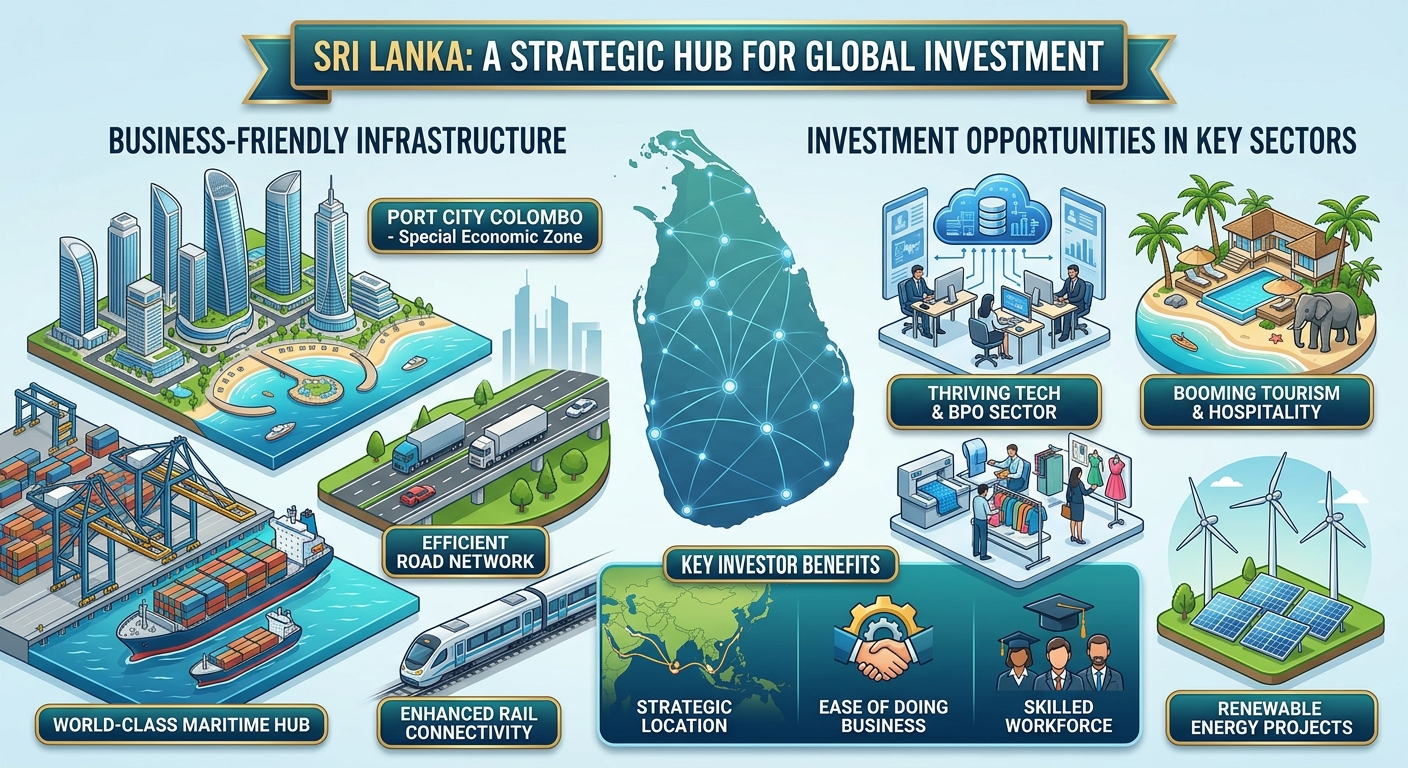
1. Strategic Geographic Location
- Strategic Location for Trade: Sri Lanka is strategically located at the crossroads
of major international shipping routes, making it a natural hub for trade
between Asia, Europe, and Africa.
- Access to Key Markets:
It provides access to the markets of South Asia, the Middle East, and
Africa. The Colombo Port is one of the busiest transshipment hubs
in the world.
2. Stable Political Environment
- Democratic Governance:
Sri Lanka is a stable democracy with a history of peaceful elections and
governance.
- Reforms and International Engagement: The government is actively implementing reforms to
improve ease of doing business, reduce bureaucracy, and foster foreign
investment. Sri Lanka is increasingly aligned with international standards
on trade, governance, and investment protection.
3. Attractive Investment Climate
- Investment Incentives:
The Sri Lankan government offers numerous incentives for foreign
investors, including tax holidays, exemptions on import duties, and
facilitation of investment procedures.
- Free Trade Agreements (FTAs): Sri Lanka has access to several FTAs, including those
with India, Pakistan, and the South Asian Association for Regional
Cooperation (SAARC). It is also working toward an FTA with China and other
key global trade partners.
- Ease of Doing Business: The country is improving its ease of doing business
ranking by simplifying procedures for starting businesses, registering
property, and paying taxes.
4. Robust Economic Growth and Market Potential
- Economic Growth:
Sri Lanka's economy has shown resilience, with consistent growth in
sectors such as manufacturing, agriculture, and services. Recent economic
reforms and infrastructure investments are expected to drive future
growth.
- Diversified Economy:
The economy is diverse, with strong sectors in agriculture (tea, spices),
manufacturing (textiles, garments), services (tourism, finance), and IT
(software development, BPO).
- Growing Middle Class:
A growing and youthful middle class offers a large domestic market for
goods and services, making Sri Lanka an attractive location for
consumer-driven businesses.
5. Skilled Workforce and Cost-Effective Labor
- Educated Workforce:
Sri Lanka boasts a high literacy rate (above 90%) and a skilled workforce,
particularly in fields such as technology, engineering, and healthcare.
- Affordable Labor Costs: Labor costs are competitive compared to many regional
neighbors, providing businesses with access to cost-effective, skilled
workers.
- Modern Infrastructure:
Sri Lanka has made substantial investments in infrastructure, including
the development of highways, ports, and airports. The Colombo
International Financial City (CIFC) is an example of large-scale
infrastructure projects aimed at fostering a financial hub.
- ICT Development:
The government is focusing on developing the Information and Communication
Technology (ICT) sector, with tech parks and an increasing number of IT
hubs attracting international businesses.
7. Tourism and Hospitality Industry
- Tourism Potential:
Sri Lanka is renowned for its natural beauty, rich cultural heritage, and
growing tourism sector. The government is focusing on boosting tourism
infrastructure, creating opportunities for investment in hotels, resorts,
and leisure businesses. - Government Support:
The government has plans to increase the number of international visitors
and improve tourism facilities, which translates into business
opportunities.
8. Access to Financing and Financial Services
- Strong Banking Sector:
Sri Lanka’s banking sector is well-regulated, with both local and
international banks providing a wide range of services for foreign
investors.
- Access to Credit:
The Central Bank of Sri Lanka has made efforts to provide favorable credit
facilities for foreign investors, alongside policies encouraging economic
reforms and private sector growth.
9. Bilateral Relations and Trade Partnerships
- Strong Relations with Saudi Arabia: Sri Lanka maintains strong diplomatic, economic, and
cultural ties with Saudi Arabia, with growing trade and investment
cooperation between the two nations.
- Investment Channels:
Saudi investors can benefit from the existing bilateral agreements and
opportunities in sectors like infrastructure development, energy,
agriculture, and tourism.
10. Government Support and Legal Framework
- Foreign Investment Protection: Sri Lanka offers legal protections to foreign
investors, including guarantees against expropriation and repatriation of
profits.
- One-Stop Investment Services: The Board of Investment (BOI) in Sri Lanka provides a
one-stop service for investors, facilitating all necessary permits,
licenses, and tax incentives.
11. Free Zones and Special Economic Zones (SEZs)
- Export Processing Zones (EPZs): Sri Lanka has established several EPZs that provide
attractive incentives, including tax breaks and customs duty exemptions,
for manufacturing and export-focused industries.
- High-tech Zones:
The government is also promoting special zones for technology companies, making
Sri Lanka a hub for innovation and IT-based businesses.